Encryption Standards for Instant Withdrawals in Electronic Fund Transfers
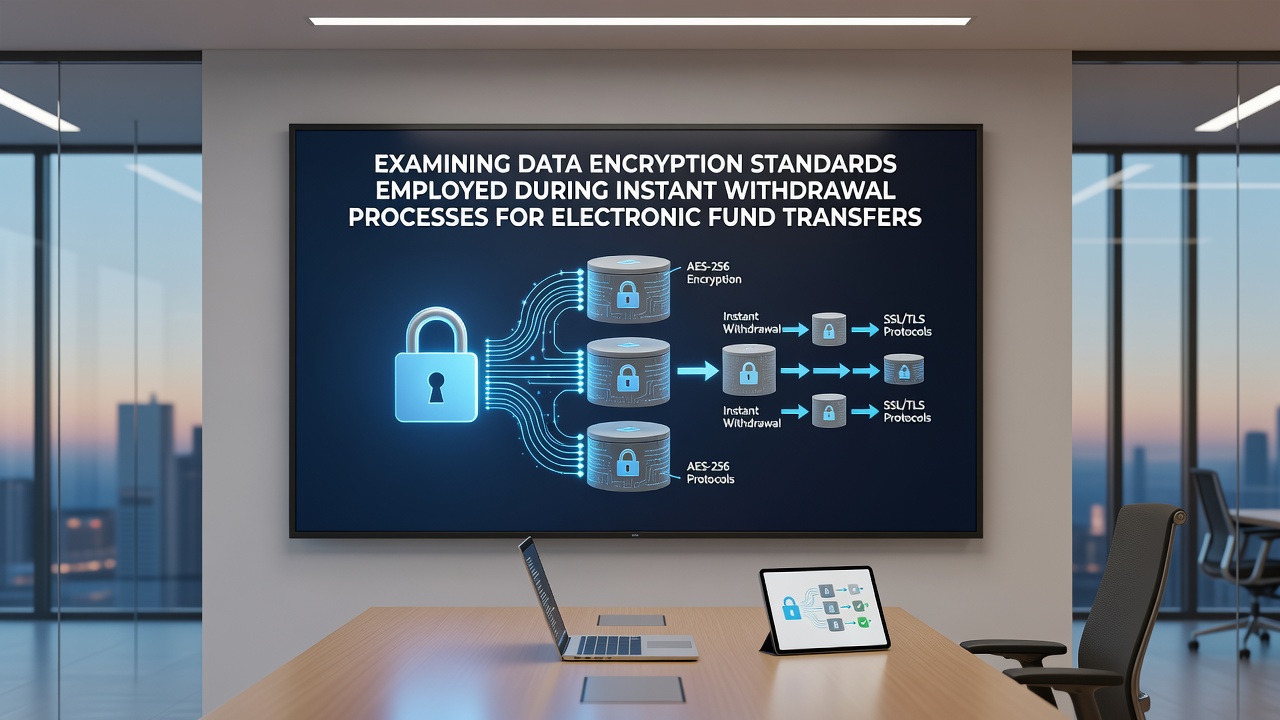
Financial institutions and payment processors rely on established encryption standards to protect data during instant withdrawal processes for electronic fund transfers, and these protocols form the backbone of secure transactions across global banking networks. Standards such as Advanced Encryption Standard with 256-bit keys handle the bulk of data protection tasks while Transport Layer Security versions 1.2 and 1.3 secure communications channels between systems. Observers note that these methods work together to encrypt sensitive account details and transaction records before any funds move out of an account.
Core Encryption Protocols in Use
Research from the National Institute of Standards and Technology shows that AES-256 remains the primary symmetric encryption algorithm for securing stored and transmitted financial data in withdrawal systems. Organizations implement this standard because it resists known cryptanalytic attacks and meets requirements set by regulatory frameworks worldwide. Public key infrastructure based on RSA or elliptic curve cryptography manages key exchanges during session setup for instant transfers. These asymmetric methods allow parties to authenticate each other without exposing private keys over open networks.
Payment processors also deploy Hash-based Message Authentication Codes to verify data integrity throughout the withdrawal sequence. Any alteration to transaction details triggers an immediate rejection before funds leave the originating account. Experts point out that combining these layers creates defense in depth rather than relying on a single protective measure.
Application During Instant Withdrawal Sequences
Instant withdrawal systems initiate encryption at multiple points in the transaction flow. The moment a user requests funds the client application encrypts the request payload using session keys derived through TLS handshakes. Servers then decrypt only enough information to validate the request before re-encrypting it for backend processing. This approach minimizes exposure windows while still allowing rapid execution that users expect from instant services.
Tokenization often complements encryption by replacing actual account numbers with unique identifiers that hold no value if intercepted. Systems generate these tokens on the fly and map them back only within secure environments. Data shows this combination reduces risk during the brief periods when information travels between payment gateways and banking institutions.
Regulatory and Industry Benchmarks
Payment Card Industry Data Security Standard version 4.0 requires encryption for cardholder data both at rest and in transit, and organizations processing instant electronic fund transfers align their practices with these rules. Similar guidelines from the European Banking Authority emphasize strong customer authentication paired with robust encryption to prevent fraud in real-time payment environments. Australian regulators have updated their expectations for encryption key management in response to evolving threats observed through 2025.
Industry groups such as the FS-ISAC share threat intelligence that helps operators adjust encryption configurations quickly. Reports indicate that many institutions performed key rotation cycles and protocol upgrades ahead of anticipated changes scheduled for June 2026. These adjustments aim to maintain compatibility with emerging quantum-resistant algorithms while preserving transaction speed.

Performance Considerations and Implementation Patterns
Engineers balance encryption overhead against the need for sub-second processing times in instant withdrawal environments. Hardware security modules accelerate cryptographic operations and keep keys isolated from general server memory. Studies from academic sources including those published by the University of Cambridge Computer Laboratory reveal that optimized implementations of AES in counter mode can handle thousands of transactions per second without introducing noticeable delays.
Cloud-based payment platforms often use envelope encryption where data keys are themselves encrypted under master keys stored in dedicated key management services. This architecture allows granular access controls and supports rapid key rotation across distributed systems. Observers note that such patterns appear frequently in services offering instant electronic fund transfers to retail users.
Emerging Developments and Future Directions
Post-quantum cryptography initiatives led by NIST continue to evaluate algorithms that could replace current public key methods in the coming years. Several financial organizations began pilot programs in early 2026 to test hybrid approaches that combine classical and post-quantum techniques. These tests focus on maintaining backward compatibility while preparing infrastructure for potential future threats.
Zero-knowledge proof techniques appear in research papers examining privacy-preserving verification of withdrawal eligibility without revealing full account details. Although still largely experimental in production instant transfer systems, early trials suggest these methods could reduce the volume of sensitive data that needs encryption at certain stages. International bodies including the Bank for International Settlements have published discussion papers on these innovations and their potential impact on payment security standards.
Conclusion
Encryption standards continue to evolve alongside instant electronic fund transfer capabilities, and current implementations center on proven algorithms such as AES-256 and TLS 1.3 supported by tokenization and hardware protections. Regulatory frameworks across multiple jurisdictions guide these practices while industry collaboration accelerates responses to new risks. As institutions prepare for updates expected around June 2026, the focus remains on preserving both security and transaction speed in withdrawal processes.