Biometric Authentication Enhances Mobile Access to Casino Rewards and Promotions
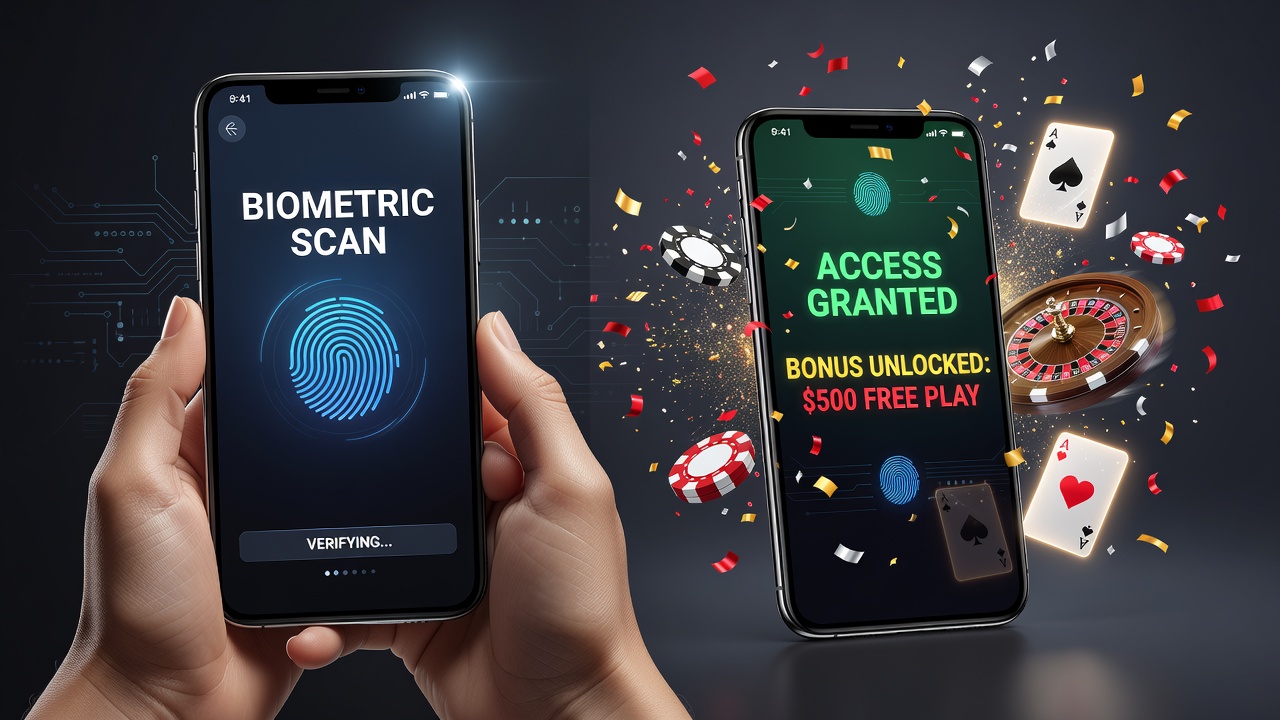
Biometric verification uses fingerprint scans, facial recognition, and iris patterns to confirm player identity on smartphones, and this process replaces traditional password entry or SMS codes when users claim casino bonuses. Operators integrate these tools directly into mobile apps, which allows instant account access while meeting regulatory standards for customer identification. Data from industry reports indicates that such systems reduce verification times from minutes to seconds, and they maintain security through encrypted biometric templates stored locally on devices rather than centralized servers.
Research from the National Institute of Standards and Technology shows that facial recognition algorithms achieve accuracy rates above 99 percent in controlled lighting conditions, and this reliability supports seamless bonus activation for eligible players. Casinos apply these methods during account registration and subsequent logins, which streamlines the process of unlocking welcome offers, free spins, or deposit matches without repeated manual checks. Those who study mobile gaming trends note that adoption has grown steadily since 2023 as smartphone hardware improved, with many devices now featuring advanced sensors as standard components.
Core Mechanisms Behind Biometric Integration
Smartphone operating systems provide secure APIs that casino apps call upon to capture and match biometric data, and this integration happens in the background once users enable the feature during setup. A fingerprint sensor reads the unique ridge patterns on a player's thumb or finger, converts them into a mathematical representation, and compares it against the stored template to grant access. Facial recognition employs infrared cameras and depth sensors to map facial geometry, which works even in low light and resists spoofing attempts through liveness detection.
These steps connect directly to bonus systems because verified sessions trigger automated eligibility checks against player history and location data, and this automation prevents delays that once occurred when staff reviewed documents manually. According to findings from a 2025 study by the University of Nevada's gaming research center, platforms using biometrics reported a 40 percent increase in successful bonus redemptions within the first hour of login compared to older methods. The same analysis highlighted reduced support tickets related to forgotten credentials or verification failures.
Security and Compliance Advantages
Biometric data remains on the device under current implementations, and this local storage limits exposure risks that accompany shared passwords or cloud-based records. Encryption protocols protect the templates, and any match attempt requires physical presence or active user interaction, which adds layers against remote fraud. Regulatory frameworks in multiple jurisdictions require ongoing audits of these systems, and operators must demonstrate that biometric matches align with anti-money laundering rules without storing raw images.
Figures from the Australian Communications and Media Authority reveal that biometric-enabled services across digital entertainment sectors saw fraud incidents drop by 28 percent between 2024 and 2026, and similar patterns appear in regulated casino environments. Players complete identity checks once, after which repeated bonus claims occur through a simple scan or glance, and this efficiency supports higher engagement rates during promotional periods. Observers note that the approach also helps operators comply with age verification mandates because biometric profiles link to government-issued documents submitted at signup.
Practical Examples in Mobile Casino Environments
Take one major operator that rolled out fingerprint-based bonus claiming in its app during early 2025, and within six months the feature handled over 2 million transactions monthly with average completion under three seconds. Another platform combined facial recognition with geolocation to confirm players were in permitted areas before activating location-specific promotions, and this combination eliminated manual address confirmations that previously slowed the process. Those who track app analytics report that users who activate biometrics return to claim rewards more frequently than those relying on PINs alone.
By July 2026, several North American and European platforms had expanded these capabilities to include multi-factor biometric options, where a fingerprint pairs with a brief facial scan for higher-value bonuses, and this layered method maintains speed while meeting elevated security thresholds. Industry reports indicate that such enhancements have supported steady growth in mobile bonus participation across markets with strict verification rules.
Future Developments and Industry Trends
Hardware improvements continue to refine sensor accuracy, and software updates from device manufacturers integrate new anti-spoofing techniques that respond to emerging threats. Research institutions explore behavioral biometrics that analyze typing patterns or grip pressure alongside physical traits, and these additions could further personalize bonus delivery without additional steps. Data indicates that operators who update their systems regularly maintain higher compliance scores during audits.
Collaboration between technology providers and gaming companies drives standardized protocols, and this cooperation ensures biometric tools work across different smartphone models and operating systems. Players encounter consistent experiences whether claiming a loyalty reward or a limited-time promotion, and the underlying technology handles the verification load invisibly in most cases.
Conclusion
Biometric verification has become a standard component in mobile casino applications because it accelerates identity confirmation and bonus access while preserving security requirements. Evidence from regulatory bodies, academic studies, and platform data shows measurable improvements in transaction speed and reduced friction for users. As smartphone capabilities advance and more jurisdictions refine digital verification standards, these systems are positioned to handle increasing volumes of promotional activity through 2026 and beyond.